
I had the opportunity to travel to Cauayan, Negros
Occidental during the search in activity of Christian Brother at Cabarruz
College. I was excited and happy because this is my first time to visit this
place. The environmental surroundings which is clean and green and you can observe
the simplicity of life here although there are some buildings beautifully
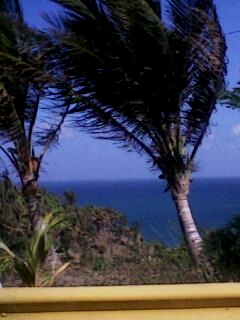
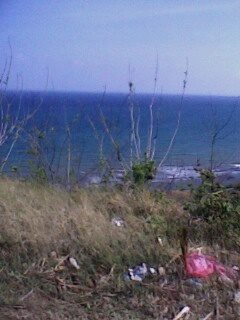
built. One thing I liked most going on this place was the overlooking ocean
view beside the road as you are heading and reaching the place of Cauayan.
Stunning and breathtaking view of blue and clear ocean. It takes more than 2
hours by private car from Kabankalan city to reach this place.
Interesting History
Interesting History
Interesting to learn that long before the Spaniards came
to Negros, this town was a wilderness and primitive people depended on hunting
and fishing for a living. The town was covered with bamboo thickets called Kawayanin the local dialect, hence the name "Cauayan".
In 1822, Cauayan was formally founded by Don Vicente Paulo Decena, believed to have come from Cebu. He was enticed into Cauayan by the legendary beauty of a native girl who subsequently became his wife, and Don Vicente Paulo Decena's family is still living in Cauayan and it is making its progress with their help.
During the Spanish era, a seat for the municipal government was sought. Guiljungan, Cauayan and Isio were candidates but Isio prevailed as it was more populated. It got the honor of being the center of government although gobernadorcillos were accorded to Cauayan and Guiljungan.
Not much progress happened to the town at that time since the Spanish rulers were reluctant to educate their subjects. Even when they built schools, only a few privileged were admitted to them. There were no roads and most people were required to render forced labor.
All these changed when the Americans came in 1904. The tribunal in Isio was shifted to Cauayan and this fostered development. The natives were taught modern ways to raise crops, and schoolhouses, roads and bridges were constructed. Not even the Japanese occupation could disrupt the development of the town since then.
In 1822, Cauayan was formally founded by Don Vicente Paulo Decena, believed to have come from Cebu. He was enticed into Cauayan by the legendary beauty of a native girl who subsequently became his wife, and Don Vicente Paulo Decena's family is still living in Cauayan and it is making its progress with their help.
During the Spanish era, a seat for the municipal government was sought. Guiljungan, Cauayan and Isio were candidates but Isio prevailed as it was more populated. It got the honor of being the center of government although gobernadorcillos were accorded to Cauayan and Guiljungan.
Not much progress happened to the town at that time since the Spanish rulers were reluctant to educate their subjects. Even when they built schools, only a few privileged were admitted to them. There were no roads and most people were required to render forced labor.
All these changed when the Americans came in 1904. The tribunal in Isio was shifted to Cauayan and this fostered development. The natives were taught modern ways to raise crops, and schoolhouses, roads and bridges were constructed. Not even the Japanese occupation could disrupt the development of the town since then.
 |
| THIS IS THE SCHOOL WE VISITED AT CAUAYAN NEGROS |
Cauayan is a first class municipality in
the province of Negros Occidental, Philippines. Located on the southern portion
of the province, it is bounded on the east by the Municipality of Ilog; on the
south by the Municipality of Candoni; on the west by the progressive mining
City of Sipalay and on the north by the Panay Gulf with its bountiful fishing
grounds.
Tourism has
recently picked up in the Cauayan Municipality, with its fine white sand
beaches and diverse marine and wildlife.
I have not
seen other beaches in Cauayan but there are lots of beautiful hidden beautiful
beaches in this municipality.
Punta Bulata White
Beach Resort, is the most developed resort in the area, with an AA
accreditation from the Department of Tourism, has seen tourists from all parts
of the world who come to relax.
Danjugan Island
Marine Reserve, a wildlife sanctuary in Brgy. Bulata is also one of the most
recognized dive spots in the region. Once featured on the cover of Mabuhay
Magazine.
Danjugan
Island is the largest of the Bulata Islands in Cauayan.
Suha Cave is almost
20 kilometers away from the town proper. Located in Sitio Suha, Brgy.
Camalandaan, the cave has stalagmites and stalactites.
If I have the
chance to come back on this place I will visit this places which is
interesting to visit.
BELOW ARE THE STUNNING SHOTS ALONG THE ROADS OF CAUAYAN





Other Points of Interest:
Punta Bulata Beach Resort
Danjugan Island (Marine Sanctuary)
Bulata Island
Danjugan Island (Marine Sanctuary)
Bulata Island
FESTIVALS
Lubay-Lubay Festival and
Feast of St. Paul (January 25)
Feast of St. Paul (January 25)
MARKET DAYS
Monday (Brgy. Poblacion)HOW TO GET THERE:
Cauayan is approximately three-and-a-half hours drive from Bacolod City by public utility vehicles and about three hours by private car. Air conditioned and non-air-conditioned buses are available at the Bacolod City South Terminal.


